Trapani and Marsala Salt Pans: Sunset and the Salt Museum
Updated October 26, 2026 · 5 min read
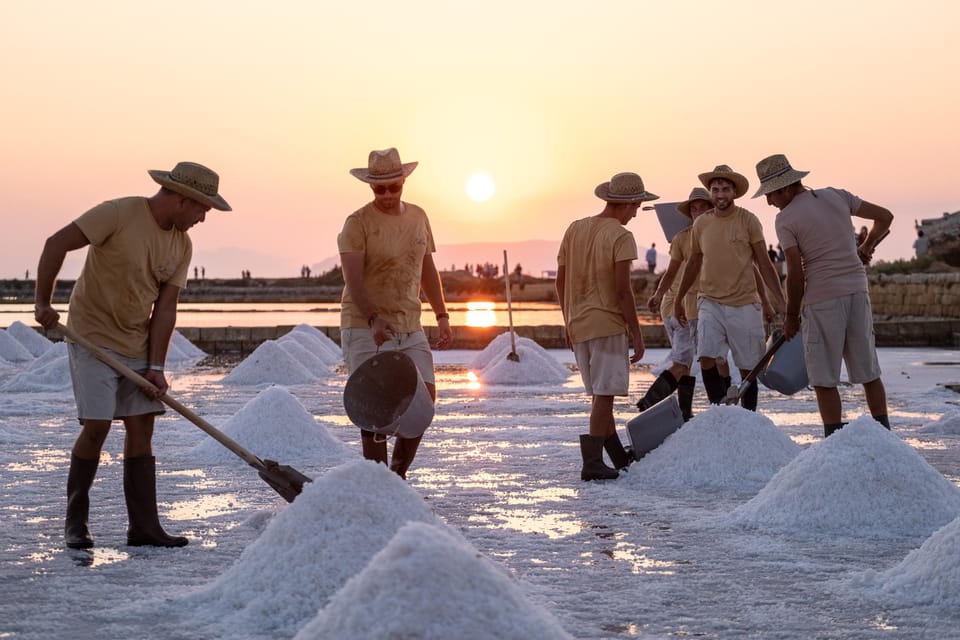
Choose the Trapani and Paceco reserve for salt history, birdlife and a proper museum visit; choose the Marsala lagoon for the classic sunset composition across water and windmills. They belong to the same western-Sicilian landscape, but they are not one interchangeable photo stop.
Trapani: the stronger introduction to salt
South of the city, the Saline di Trapani e Paceco reserve protects working salt pans and wetland habitat. The private Salt Museum at Nubia occupies an old mill and explains the tools and labour behind the landscape. The guided salt-pans and Salt Museum visit lasts 75 minutes and begins at €24.99 in the current selection.
That short format is useful if you want more than photographs without giving the site half a day. The operator describes a route through the Culcasi salt pans and museum. Check the meeting point and language for your date; the reserve, museum and commercial salt works are related places, not a single entrance with one universal timetable.
Marsala: sunset and lagoon space
Around the Stagnone lagoon north of Marsala, broad water, salt heaps and windmills create the familiar sunset view. A sunset aperitif can be enjoyable, but it is not the same as learning how salt is made. If understanding the process matters, choose a visit that explicitly includes a guide or museum rather than assuming every sunset stop does.
Sunset colour is never guaranteed. Haze, cloud and wind alter the scene, and viewpoints can feel busy in high season. Arrive before the sun is low enough to disappear; the pools, birds and geometry are worth seeing in ordinary light.
When to go
The WWF reserve notes that salt harvesting can be observed from July to September, while migratory-bird watching is particularly rewarding from February to April and September to December. Access can change to protect nesting wildlife. Stay on authorised routes and follow the reserve’s current instructions.
Wind is normal and shade is scarce. Bring water, sun protection and shoes suitable for dusty or occasionally muddy tracks. The landscape is flat, but that does not automatically make every path accessible; confirm the exact route with the operator if step-free access matters.
Our recommendation
For a first visit, take the 75-minute Trapani salt-pans and museum tour, then see the sunset separately if the weather is promising. This keeps the history from becoming background decoration. Choose Marsala instead when your priority is the lagoon atmosphere or when it fits naturally with a winery visit.